Greek Sheet Pan Lamb with Tomatoes, Onions & Olives
There is a category of Greek home cooking that requires almost no technique — just good ingredients, a generous hand with olive oil and lemon, and the patience to let the oven do its work. This sheet pan lamb belongs squarely in that category, and it is one of the most satisfying things you can make on a weeknight or serve to a table full of people on a Sunday.
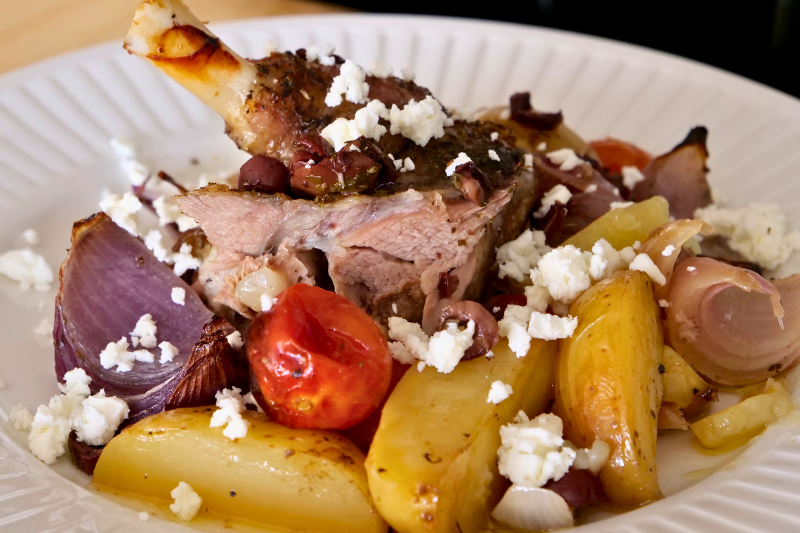
The dish is built on a principle that every Greek grandmother understands instinctively: when you roast lamb low and slow with tomatoes, the tomatoes collapse into a sauce. The onions caramelize. The potatoes drink up all those pan juices — the lemon, the olive oil, the lamb fat, the oregano. And the olives, which you might think an odd addition to a roasting pan, dissolve into the background in the most wonderful way, adding a deep, briny richness that you'd miss if they weren't there.
This is the kind of recipe that appears in no particular cookbook, because it lives in muscle memory. It's what Greek home cooks make when they want something that tastes like it took all day but didn't. Cover it tightly, leave it alone for an hour and a half, then turn up the heat and let everything caramelize and brown. That's it. That's the whole secret.
Use bone-in lamb if you can find it — the bone flavors the pan juices in a way that boneless simply cannot replicate. And use ripe tomatoes. In winter, cherry tomatoes are your best friend here; they collapse beautifully and are reliably sweet year-round. Serve straight from the pan with a mountain of crusty bread, because the juices at the bottom of that pan are the best part of the whole meal.
RATING
SERVES
4
PREP TIME
15 min
COOK TIME
2 h 0 min
TIME
2 h 15 min
Ingredients
- 2 –2½ lbs / 1–1.2 kg lamb shoulder or leg bone-in preferred
- 1½ lbs / 680g small potatoes cut into wedges
- 2 large onions cut into wedges
- 2 –3 ripe tomatoes chopped, or 1 pint cherry tomatoes
- ½ cup / 80g Kalamata olives pitted
- 5 –6 garlic cloves smashed
- ⅓ cup / 80ml extra-virgin Greek olive oil
- Juice of 2 lemons
- 1 tablespoon dried Greek oregano
- Salt and freshly ground black pepper
- 1 cup / 240ml water
Instructions
-
Preheat and prepare the pan. Preheat the oven to 350°F / 175°C. Place the lamb in a large roasting pan or rimmed sheet pan. Arrange the potatoes, onions, tomatoes, olives, and garlic around the meat in an even layer.
-
Season. Season everything generously with salt and pepper. Sprinkle the oregano evenly over the lamb and vegetables. Drizzle the olive oil and lemon juice over everything, then add the water to the pan. Toss the vegetables lightly to coat them in the juices.
-
Cover and roast. Cover the pan tightly with foil and roast for 1 hour 30 minutes. This slow, covered phase is what makes the lamb tender and builds the flavorful base of juices that defines this dish.
-
Uncover and caramelize. Increase the oven temperature to 425°F / 220°C. Remove the foil and continue roasting for 30–40 minutes, until the lamb is well browned, the potatoes are crisp at the edges, the tomatoes have collapsed into a sauce, and the onions are soft and golden.
-
Rest and serve. Remove from the oven and let the lamb rest for 10 minutes before serving. Spoon the pan juices generously over everything and serve directly from the pan.
Want to learn more easy, healthy Mediterranean diet recipes? Sign up for my online course “Mastering the Mediterranean!“
Notes
RECIPE NOTES & TIPS
- On the lamb cut: Bone-in lamb shoulder is the best choice for this recipe — the bone contributes enormously to the flavor of the pan juices and keeps the meat moist during the long roast. Bone-in leg works beautifully too. If you use boneless, reduce the cook time slightly and check for doneness earlier.
- On the tomatoes: This recipe lives and dies by the quality of the tomatoes. In peak summer, use the ripest, most fragrant fresh tomatoes you can find. In winter or early spring, cherry tomatoes are a reliable substitute — they're naturally sweeter and collapse into a better sauce than out-of-season large tomatoes.
- On the olives: Kalamata olives are the right choice here — their brininess and depth of flavor stand up to the long roasting time. Rinse them lightly if they are very salty, and taste the dish before adding any additional salt at the end, since the olives season the pan juices as they cook.
- On the liquid: If the pan looks dry at any point during roasting — particularly during the uncovered phase — add a splash of water or dry white wine. The pan should always have some liquid to prevent burning and keep the vegetables from drying out.
- On the oven: Every oven runs differently. Check the lamb at the 2-hour mark. The meat should be pulling away from the bone and very tender; the vegetables should be deeply colored and fragrant.
VARIATIONS
- Add heat: A pinch of dried chili flakes scattered over the pan before roasting adds a gentle warmth that works very well with the lemon and oregano.
- Finish with fresh herbs: A handful of fresh oregano or flat-leaf parsley scattered over the pan just before serving adds brightness and color.
- Add feta: Crumble good Greek feta over the pan in the last 10 minutes of roasting for a salty, creamy finish that melts partially into the pan juices.
- Wine: Substitute ½ cup of the water with dry white wine for added depth.
SERVING SUGGESTIONS
Serve this straight from the roasting pan with plenty of crusty bread to mop up the pan juices — that sauce is the soul of the dish. For a full Greek table, pair with a simple maroulosalata (lettuce and dill salad) and a bowl of Greek yiayia's roasted potatoes if you want to go all out. This is also a natural choice for a Greek Easter table alongside mageiritsa and red dyed eggs.