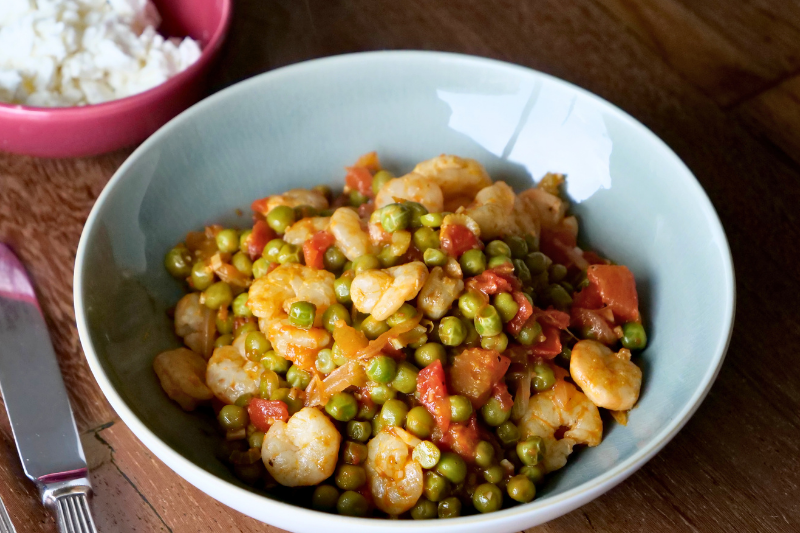
Slow-Cooked Peas and Shrimp
Ingredients
- 6 tablespoons extra-virgin Greek olive oil divided
- 1 large onion halved and sliced
- 1 small fennel bulb trimmed, halved, and sliced
- 2 garlic cloves finely chopped
- 3 cups fresh or thawed frozen peas
- 2½ cups chopped fresh tomatoes or 1 (15-oz) can diced tomatoes
- Sea salt and freshly ground black pepper to taste
- 1 star anise 12 large shrimp peeled and deveined, tails left on (heads optional)
- ¼ cup ouzo
- 1 lemon Grated zest
- ½ to ⅔ cup crumbled Greek feta optional
Instructions
-
In a wide pot, heat ¼ cup of the olive oil over medium heat. Add the onion and fennel and cook until soft, 8 to 10 minutes, stirring occasionally. Stir in the garlic.
-
Add the peas and toss to coat in the oil. Add the tomatoes with their juices. Season to taste with salt and pepper. Add enough water to come about a quarter of the way up the peas. Add the star anise. Cover partially and cook for 25 to 30 minutes, until everything is tender and the juices are almost cooked off.
-
About 10 minutes before the peas are ready, heat a large, deep skillet over medium-high heat. Add the remaining 2 tablespoons olive oil and, in a few seconds, add the shrimp. Cook for 1 minute on each side.
-
Pull the skillet off the flame and slowly and carefully pour in the ouzo — away from the flame, as it may flare up. Lower the heat and cook the shrimp for another minute or two, until bright pink. Season lightly with salt and pepper and stir in the lemon zest.
-
Transfer the shrimp and all the pan juices to the pot with the peas. Finish cooking together for a few minutes. Serve sprinkled with crumbled feta, if desired.
Notes
Make it seasonal: This recipe truly shines with fresh spring peas — look for them at farmers' markets from April through June. Frozen peas work beautifully year-round; simply thaw before using and reduce the braising time slightly.
The fennel matters: Don't skip it. Fresh fennel adds a gentle anise sweetness that echoes the ouzo and the star anise, weaving the dish together. If fennel isn't available, a few fennel seeds stirred in with the garlic will do the job.
On the ouzo flambé: Pull the pan completely off the heat before adding the ouzo. If using a gas burner, lean the pan away from you. The flare-up is brief but real. If you prefer, substitute a dry white wine or skip the flambé and simply let the ouzo cook off over low heat for 2 minutes.
No star anise? A small pinch of fennel seeds or a strip of fresh fennel frond works as a substitute.
Serving suggestions: Serve with crusty country bread to soak up the olive oil-enriched braising juices. Works well over rice or orzo. A chilled glass of Assyrtiko or Moschofilero is a natural pairing.
Nutritional highlights
Peas are an exceptional source of plant-based protein and fiber, with a low glycemic index — making them a cornerstone of the Mediterranean diet and a longevity food eaten widely in Greece's Blue Zone communities.
Shrimp is lean, high-protein seafood (approx. 20g protein per 100g) rich in iodine, selenium, and omega-3 fatty acids, all of which support thyroid health, immune function, and cardiovascular health.
Extra-virgin olive oil supplies oleocanthal and oleic acid — potent anti-inflammatory compounds linked in numerous studies to reduced risk of heart disease, cognitive decline, and certain cancers.
Fennel is rich in vitamin C, potassium, and phytonutrients that support digestive health and reduce inflammation.
Related Recipes
Looking for more Greek peas and seafood recipes? Try these:
- Slow-Cooked Peas with Tomatoes and Herbs — the classic vegetarian arakas laderos this recipe is built on
- Braised Peas with Fennel, Sun-Dried Tomatoes and Mussels — another gorgeous ladera with seafood
- Spring Fava with Fresh Peas — a silky fresh pea purée that pairs beautifully with grilled shrimp
- Shrimp Saganaki with Ouzo and Feta — the taverna classic, all in one pan
- Greek Shrimp and Tomatoes with Feta (Garides Saganaki) — a perennial favorite from My Greek Table