Roasted Sweet Potatoes with Herbed Lentils & Lemony Tahini
Ingredients
For the Sweet Potatoes
- 4 medium sweet potatoes scrubbed and halved lengthwise
- 2 Tbsp extra-virgin Greek olive oil
- 1 tsp ground cumin
- Sea salt and freshly ground black pepper to taste
For the Herbed Lentils
- 1 cup / 200 g small green or brown lentils rinsed and drained
- 1 bay leaf
- 2 Tbsp extra-virgin Greek olive oil
- 1 small red onion finely chopped
- 2 garlic cloves minced
- 1/2 tsp ground cumin
- 1/2 tsp smoked paprika
- 2 scallions trimmed and thinly sliced
- 1/2 cup chopped fresh flat-leaf parsley
- 1/4 cup chopped fresh dill
- 2 Tbsp fresh lemon juice or to taste
- Sea salt and freshly ground black pepper to taste
For the Lemony Tahini
- 1/3 cup tahini
- 3 Tbsp fresh lemon juice
- 1 small garlic clove finely grated or minced
- Pinch of ground cumin
- Pinch of sea salt
- 3 –5 Tbsp ice-cold water or as needed
Instructions
-
Heat the oven. Preheat the oven to 425°F / 220°C. Line a large sheet pan with parchment if desired.
-
Season the sweet potatoes. Brush or rub the cut sides and skins of the sweet potatoes with the olive oil. Season with cumin, salt and black pepper.
-
Roast cut-side down. Arrange the sweet potatoes cut-side down on the sheet pan. Roast for 35–45 minutes, depending on their size, until the cut surfaces are deeply caramelized and the centers are completely tender when pierced with a knife.
-
Cook the lentils. While the sweet potatoes roast, place the lentils and bay leaf in a saucepan and cover generously with water. Bring to a boil, reduce to a simmer and cook until tender but still intact, about 20–25 minutes. Drain well and discard the bay leaf.
-
Season the lentils. Transfer the warm lentils to a bowl. Add the olive oil, red onion, garlic, cumin, smoked paprika, scallions, parsley, dill and lemon juice. Season with salt and pepper and toss gently. Taste and adjust the lemon and seasoning.
-
Make the lemony tahini. Whisk together the tahini, lemon juice, garlic, cumin and salt. The mixture may seize and thicken at first; whisk in the ice-cold water 1 tablespoon at a time until the sauce becomes pale, smooth and easily spoonable.
-
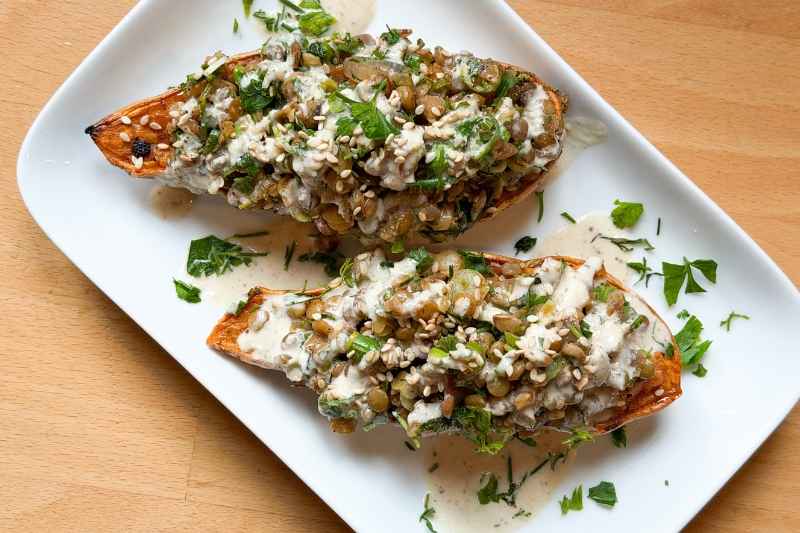
Assemble. Place the roasted sweet potato halves cut-side up on a platter or individual plates. Spoon the herbed lentils generously over and around them.
-
Finish. Drizzle generously with the lemony tahini. Finish with additional dill, parsley or scallions if desired and serve warm or at room temperature.
Want to learn more easy, healthy Mediterranean diet recipes? Sign up for my online course “Mastering the Mediterranean!“
Want to learn more easy, healthy Mediterranean diet recipes? Sign up for my online course “Mastering the Mediterranean!“
Notes
Diane’s Tips
Roast cut-side down. Direct contact with the hot sheet pan is what gives the sweet potatoes their deeply caramelized surface.
Choose similar-size sweet potatoes. They’ll finish cooking at roughly the same time. If they are very large, allow extra roasting time.
Keep the lentils intact. You want tender lentils, not lentil purée. Begin checking them before the suggested cooking time if they are small.
Dress lentils while warm. Warm lentils absorb the lemon, olive oil, herbs and spices particularly well.
Tahini gets thicker before it gets thinner. When lemon juice first hits tahini, the sauce may tighten dramatically. Keep whisking in cold water gradually and it will become creamy and smooth.
Taste the tahini for balance. It should be nutty, lemony and savory enough to stand up to the natural sweetness of the potatoes.
Don’t be shy with fresh herbs. Parsley, dill and scallions keep the lentils tasting bright and give the finished dish much-needed freshness.
Serve warm or room temperature. That makes this especially useful for meal prep, casual entertaining or a Mediterranean lunch.
Why This Combination Is So Satisfying
This dish works because each component brings something different: sweet potatoes are soft, naturally sweet and caramelized; lentils are earthy and substantial; tahini is rich, nutty and creamy; lemon and fresh herbs provide acidity and freshness. Nutritionally, the combination also has real substance. Sweet potatoes are especially rich in beta-carotene and also provide fiber and potassium. Lentils contribute plant protein, complex carbohydrates, fiber, iron and folate. Tahini, made from sesame seeds, contributes unsaturated fats, protein and minerals. Together they make a plant-based meal that does not need meat or dairy to feel complete.
Tahini in the Greek & Eastern Mediterranean Kitchen
Tahini is much more than an ingredient for hummus. It has a long place in Greek and Eastern Mediterranean food traditions, particularly during periods of Orthodox fasting, when sesame paste is used in many dairy-free and meat-free preparations. Its rich texture is especially useful in plant-based cooking because a simple mixture of tahini, lemon and water turns into a creamy sauce without dairy. Read more in my Tahini: A Superfood Condiment guide.
Ingredient Notes
Sweet potatoes: Orange-fleshed sweet potatoes give the strongest color contrast with the green herbs and pale tahini sauce. Roast until genuinely soft and caramelized.
Lentils: Small green or brown lentils are best because they hold their shape. Red lentils break down too readily for this preparation.
Tahini: Stir the jar well before measuring. Natural sesame paste can separate in storage.
Fresh dill and parsley: The quantity of herbs is intentional. They transform the lentils from a plain pulse into a bright, fresh topping.
Cumin and smoked paprika: These warm spices bridge the earthy lentils, sweet potatoes and nutty tahini.
Lemon: Acidity is essential here. It balances both the sweetness of the potato and richness of the sesame sauce.
What to Serve with It
This is a complete vegan main course on its own. For a larger spread, serve it with a crunchy cabbage salad, bitter greens, a tomato-cucumber salad or roasted seasonal vegetables. Smaller sweet potato halves can also be served as part of a Mediterranean meze or buffet.
Greek Wine Pairing: Dry Muscat of Samos
I’d look for a dry Muscat from Samos for this dish—not the island’s famous sweet dessert wines. Muscat’s naturally aromatic citrus and floral character works beautifully with lemon, tahini, cumin and fresh herbs, while a dry style has enough acidity to balance the caramelized sweetness of the roasted potatoes. Its aromatic character also stands up well to the earthy lentils without making this plant-based dish feel heavy. Serve it well chilled.
If You Like This Recipe…
These recipes on my site explore the same sweet potato, lentil and tahini flavor world from different directions:
- Lentil–Sweet Potato Soup with Spinach and Sage — The closest semantic sibling: lentils and sweet potato together in a hearty Mediterranean soup with spinach and sage.
- Ikaria Longevity Greek Salad with Sweet Potatoes and Arugula — An Ikarian-inspired sweet potato salad with arugula, onion, olive oil and optional feta.
- Lentil Salad with Olives, Roasted Red Florina Peppers & Herbs — A fresh Greek lentil salad with peppers, olives, parsley, dill and oregano.
- Sweet and Sour Lentils Baked with Honey, Vinegar and Leeks — A Greek-inspired baked lentil main course with leeks, honey, vinegar, herbs and spices.
- Tahini-Carrot Soup with Greek Honey — Another savory use of tahini with naturally sweet root vegetables and warm spices.
- Sweet Potato Recipes from My Greek Kitchen to Yours — A useful sweet-potato recipe hub for readers looking for more fall and Thanksgiving inspiration.
Make-Ahead & Storage
All three components can be prepared ahead. Roast the sweet potatoes and cook and season the lentils up to 2 days in advance and refrigerate them separately. The tahini sauce can also be refrigerated for several days; it will thicken when cold, so whisk in a teaspoon or two of cold water before serving.
For the best texture, reheat the sweet potatoes in a 375°F / 190°C oven until warm and refresh the lentils with a little lemon juice, olive oil and fresh herbs. Assemble only when ready to serve. Leftovers keep refrigerated in airtight containers for up to 3 days.