Vegan Greek Superfood Breakfast Bowls (Kolyva)
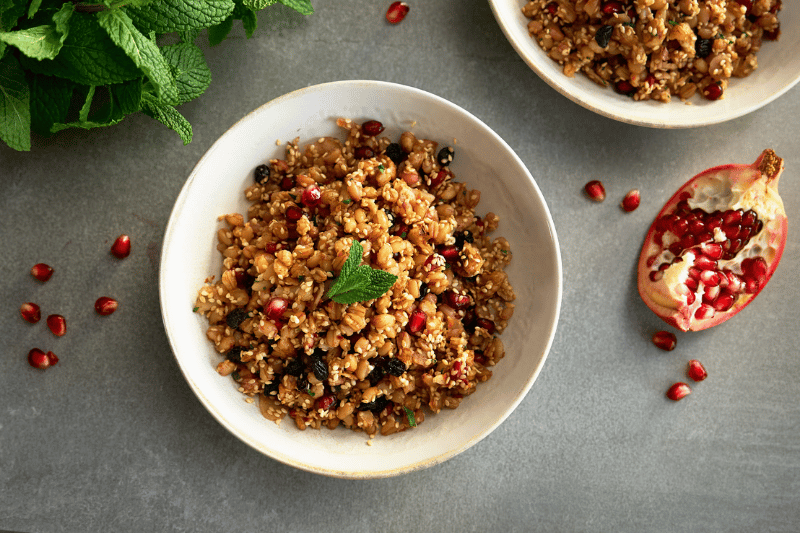
A cherished ritual food in Greece, kolyva traditionally symbolizes remembrance and renewal, made from nourishing whole grains that have sustained Greeks since antiquity. In this modern My Greek Table interpretation from Season 5’s Flavors of Longevity, I reimagine kolyva as a vibrant vegan breakfast—or dessert—superfood bowl, packed with farro, nuts, seeds, raisins, and pomegranate. It’s a delicious celebration of the longevity-boosting power of whole grains and a testament to how traditional foods evolve while honoring their roots. If you like this recipe, you’ll love this Wheatberry Pomegranate Salad and this Wheatberry Salad with Sun-Dried Tomatoes.
Ingredients
- 1 cup farro cooked according to package directions
- 1 teaspoon salt
- Peel from 1 lemon
- ⅓ cup 50 g dark seedless raisins
- ½ cup 60 g sliced almonds (white, peeled)
- ½ cup 60 g walnuts, chopped
- ¼ cup pomegranate arils
- 1 ½ teaspoons ground cinnamon
- A pinch of ground cloves
- Finely grated zest of 1 orange
- 5 –6 spearmint leaves finely chopped (dyosmos)
- 1 cup 150 g toasted whole sesame seeds
- Greek pine honey to taste
Instructions
Cook the Farro:
-
Cook the farro according to package directions in lightly salted water with two strips of lemon peel. Simmer until tender but not mushy.
Drain:
-
Drain the farro well and remove the lemon peel.
Combine Ingredients:
-
In a large bowl, combine the cooked farro, raisins, almonds, walnuts, pomegranate arils, cinnamon, cloves, and spearmint leaves.
-
Add Sesame Seeds:
-
Mix in the toasted sesame seeds.
Sweeten:
-
Add Greek pine honey to your preferred level of sweetness.
Serve:
-
Spoon into bowls and enjoy as a nourishing breakfast or dessert.
Notes
Cultural Context & Symbolism
- Traditionally, kolyva is a ceremonial dish symbolizing remembrance, rebirth, and life’s cyclical nature, made from whole wheat berries, nuts, spices, and seeds.
- This modern version transforms its symbolic whole-grain foundation into an everyday longevity bowl—still honoring its heritage while turning it into a vibrant, nourishing breakfast or dessert.
Farro vs. Whole Wheat Berries: What to Know
Both farro and whole wheat berries belong to the ancient-grain family and work beautifully in kolyva-inspired dishes, but they differ in texture, cook time, and flavor:
- Farro (usually emmer wheat) cooks more quickly, has a tender yet pleasantly chewy bite, and absorbs flavors exceptionally well. Its nutty aroma and shorter prep time make it ideal for modern, everyday use.
- Whole wheat berries (the full kernel of modern wheat) are firmer, earthier, and require a longer simmer—often 1–2 hours. Their structure holds up beautifully in traditional kolyva preparations.
- Nutritionally, both are high in fiber, minerals, and plant-based protein, offering nearly equal longevity benefits.
- Interchangeability: They can be swapped 1:1, but expect differences in texture and timing. Farro creates a softer, more breakfast-friendly bowl, while wheat berries lend a rustic, traditional firmness.
- For this recipe: Using farro modernizes the dish without losing the ancient-grain spirit at the heart of kolyva.
Nutrition Highlights:
- Whole grains for longevity: Rich in fiber, magnesium, and plant-based protein.
- Healthy fats: Nuts and sesame seeds add omega-3 and monounsaturated fats.
- Antioxidants: Pomegranate, raisins, citrus zest, cinnamon, and cloves all contribute antioxidants associated with Mediterranean dietary health.
- Naturally vegan: Fits Mediterranean, plant-forward, and whole-food longevity diets.