Crispy Roasted Cabbage with Lemony Greek Yogurt, Feta & Walnuts
Ingredients
For the Roasted Cabbage
- 1 medium green cabbage about 2–2 1/2 lb / 900 g–1.1 kg
- 4 Tbsp extra-virgin Greek olive oil
- 1 tsp dried Greek oregano
- 1/2 tsp ground coriander
- Sea salt to taste
- Freshly ground black pepper to taste
For the Lemony Greek Yogurt Sauce
- 1 cup plain Greek yogurt preferably with live and active cultures
- 1 small garlic clove finely grated
- Finely grated zest of 1/2 lemon
- 2 Tbsp fresh lemon juice
- Pinch of sea salt
For Finishing
- 1/3 cup walnuts toasted and coarsely chopped
- 1/3 cup crumbled Greek feta
- 3 Tbsp chopped fresh dill
- 2 scallions thinly sliced
- Extra-virgin Greek olive oil for drizzling
- Freshly ground black pepper to taste
Instructions
-
Heat the oven. Preheat the oven to 450°F / 230°C. Use a large rimmed sheet pan so the cabbage has enough room to brown rather than steam.
-
Cut the cabbage. Trim only the very bottom of the stem, keeping enough of the core intact to hold the wedges together. Cut the cabbage through the core into 6 thick wedges.
-
Season. Arrange the cabbage wedges on the sheet pan. Brush or rub them on all sides with the olive oil and season with oregano, coriander, salt and pepper.
-
Roast the first side. Roast for about 20 minutes, until the underside is deeply browned and the outer leaves are beginning to crisp.
-
Turn and finish roasting. Carefully turn the wedges and roast for another 15–20 minutes, until the second side is browned, the edges are crisp and almost charred in places, and the centers are tender.
-
Make the yogurt sauce. While the cabbage roasts, stir together the Greek yogurt, grated garlic, lemon zest, lemon juice and a pinch of salt. Refrigerate until ready to serve so the sauce stays cool.
-
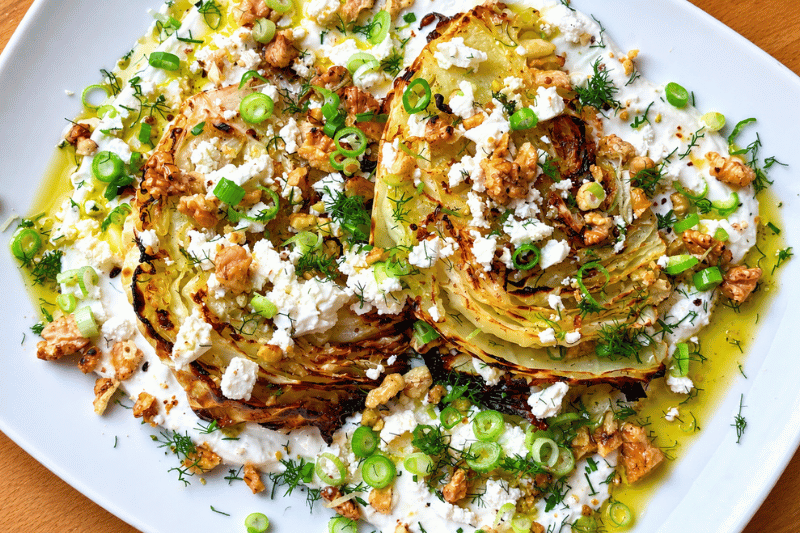
Assemble. Spread the lemony Greek yogurt sauce over a serving platter. Arrange the hot roasted cabbage wedges over the yogurt.
-
Finish and serve. Scatter the feta, toasted walnuts, dill and scallions over the cabbage. Drizzle with a little extra-virgin Greek olive oil, add freshly ground black pepper and serve while the cabbage is hot and crisp at the edges.
Want to learn more easy, healthy Mediterranean diet recipes? Sign up for my online course “Mastering the Mediterranean!“
Want to learn more easy, healthy Mediterranean diet recipes? Sign up for my online course “Mastering the Mediterranean!“
Notes
Diane’s Tips
Don’t remove the core. Keeping part of the core attached is what holds the cabbage wedges together as they roast and turn.
High heat matters. At 450°F / 230°C, the cabbage caramelizes and develops crisp, dark edges instead of simply becoming soft.
Embrace the char. Those very dark outer leaves are part of what makes this recipe so good. They bring a smoky, concentrated cabbage flavor and great textural contrast.
Give the cabbage room. Crowding encourages steaming. Use a large sheet pan and leave space between the wedges.
Keep the yogurt cold. The contrast between hot, caramelized cabbage and cool lemony yogurt is one of the best things about the dish.
Look for live cultures. If you want yogurt that contains live beneficial microbes, check the package for “live and active cultures.” Not every fermented yogurt product should automatically be described as probiotic.
Toast the walnuts. A few minutes of toasting deepens their flavor and makes the crunchy finish much more pronounced.
Why Cabbage Deserves More Attention
Cabbage is inexpensive, versatile and especially at home in fall and winter cooking. It belongs to the brassica family, along with broccoli, cauliflower and Brussels sprouts. Raw green cabbage is naturally low in calories and provides dietary fiber, vitamin C and vitamin K. Roasting changes its personality completely: the natural sweetness becomes more pronounced, the center softens and the outer leaves become nutty, crisp and caramelized.
Cabbage is also deeply at home in the Greek kitchen. When the weather turns cold, one of the simplest traditional salads is Greek Cabbage Salad, or Lahanosalata, typically built around crisp cabbage, lemon and olive oil.
A Note About Greek Yogurt & Probiotics
Greek yogurt is a fermented food and can contain live beneficial microorganisms. If that is something you specifically want from the yogurt sauce, choose a plain Greek yogurt labeled “live and active cultures.” Different yogurts contain different cultures, and not every yogurt necessarily contains probiotic strains with demonstrated health benefits, so it is better to look at the label than to assume. In this recipe, the yogurt is not heated; it stays cool beneath the roasted cabbage.
For more ideas using yogurt in savory Greek cooking, see my guide to the versatility of Greek yogurt.
What to Serve with Roasted Cabbage
This is substantial enough to serve as a light vegetarian meal with good bread, but it also works beautifully as a Mediterranean side dish alongside roasted chicken, grilled fish, lamb or a pot of beans. The yogurt, feta and walnuts give it enough richness that the rest of the meal can stay very simple.
Greek Wine Pairing: Savatiano
I’d pour a fresh, dry Savatiano with this dish. Its citrusy freshness and subtle herbal character work beautifully with the lemon, dill and oregano, while its body is gentle enough for cabbage and yogurt. A modern, unoaked Savatiano also has enough freshness to cut through the feta and walnuts without overwhelming the sweet, charred flavor of the roasted cabbage.
If You Like This Recipe…
If cabbage is in your fall and winter rotation, here are a few more ways to cook with it:
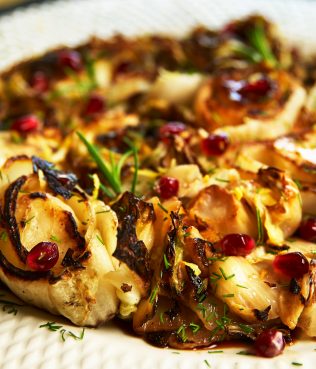
- Roasted Savoy Cabbage with Pomegranate and Herbs — Another high-heat cabbage recipe, this time with crisp charred edges, pomegranate, balsamic, lemon and herbs.
- Greek Cabbage Salad – Lahanosalata — A classic cold-weather Greek cabbage salad with carrot, dill, walnuts, pomegranate, lemon and olive oil.
- Ikaria Superfood Cabbage Pomegranate Salad — An Ikarian-inspired cabbage salad with herbs, pomegranate, pine nuts and sunflower seeds.
- Greek Goddess Cabbage Salad — A modern Mediterranean cabbage salad with herbs and its own creamy Greek yogurt dressing.
Make-Ahead & Storage
The yogurt sauce can be made several hours ahead and refrigerated. The cabbage is best roasted shortly before serving so the edges stay crisp. Leftover roasted cabbage can be refrigerated in an airtight container for up to 3 days; reheat it in a hot oven or air fryer rather than the microwave when possible. Store the yogurt sauce separately.
For make-ahead entertaining, cut the cabbage into wedges and toast the walnuts earlier in the day, then roast and assemble just before serving.