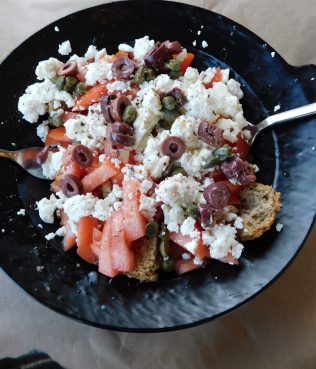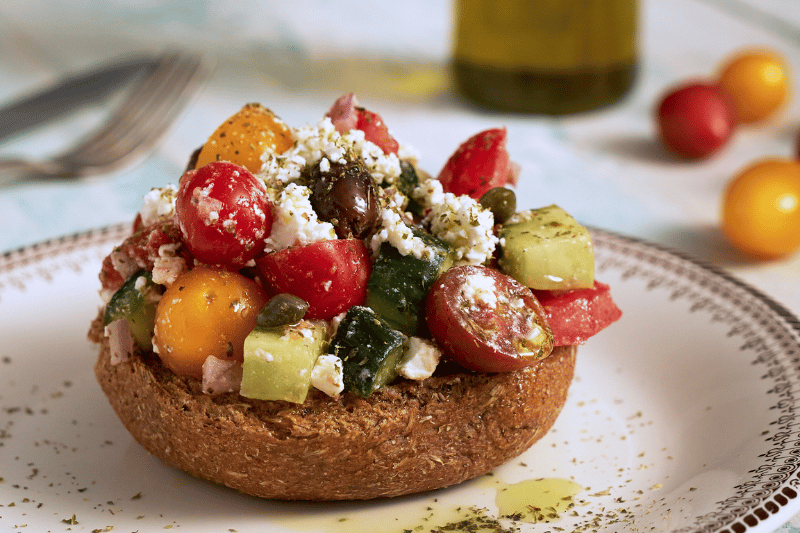
Dako Salad with Yellow & Red Tomatoes
Ingredients
- 2 medium ripe tomatoes red
- 1 ½ cups yellow or black teardrop or cherry tomatoes
- 1 cucumber
- 1 red onion
- 4 –5 tablespoons crumbled Greek feta
- ½ cup green olives or any olives of your choice
- 2 tablespoons capers drained
- Sea salt to taste
- 1 heaping tablespoon dried Greek oregano
- 5 tablespoons extra virgin Greek olive oil as desired
- 1 round Cretan barley rusk dakos / paximadia
- ½ cup fresh orange juice
Instructions
-
Core the ripe red tomatoes and cut into chunks. Halve the yellow or black teardrop tomatoes.
-
Peel the cucumber so the skin is in stripes. Slice in half lengthwise, then into ¼-inch half-circles. Chop the red onion.
-
In a mixing bowl, toss together the tomatoes, cucumber, onion, half of the feta, olives, and capers. Season with sea salt. Add 3 tablespoons of olive oil and mix. Let stand at room temperature for 10 minutes to allow flavors to meld.
-
Pour the orange juice into a shallow bowl and briefly dip each half of the barley rusk to soften. Place each half on separate serving plates. Drizzle each with about ½ tablespoon of olive oil.
-
Spoon the tomato–vegetable mixture generously over each rusk, mounding it for height. Drizzle with remaining olive oil, sprinkle with dried oregano and remaining feta, and serve immediately.
Notes
What are paximadia / barley rusks?
This recipe builds on the timeless tradition of using barley or other whole-grain rusks known in Greek cuisine as paximadia — a cornerstone of rustic, everyday meals. You can learn more about how they are made and their history in my blog post “Paximadia, Bread Rusks.”
Dakos heritage
The salad style, known as Dakos (or ntakos / kouloukopsomo), is a classic from Crete: a soaked rusk topped with fresh tomatoes, cheese (feta or mizithra), olive oil and herbs. It appears frequently in my archive under rusk-based salads.
Nutrition & Longevity Benefits
This dish is rich in fiber (from the barley rusk), vitamins and antioxidants (from tomatoes, cucumber, olives), healthy monounsaturated fats (from extra virgin olive oil), plus calcium and protein from feta. Such a combination reflects Mediterranean-diet principles linked to cardiovascular health and balanced, long-term nourishment.
Serving Tips / Variations
You can soften the rusk with orange juice (as in this version), or simply with olive oil or water — whichever you prefer. For a lighter version, omit feta or reduce olive oil. You can also vary the toppings as you like, but maintaining whole-grain rusk (paximadia), fresh produce and olive oil keeps the spirit of the dish intact.
- If you like this recipe: You’ll love my other rusk-based salad — see “Arugula, Cherry Tomato, Pomegranate & Rusk Salad.”
To read more about paximadia / rusks: Check out my comprehensive blog post “Paximadia, Bread Rusks” for background on this ancient twice-baked bread tradition.