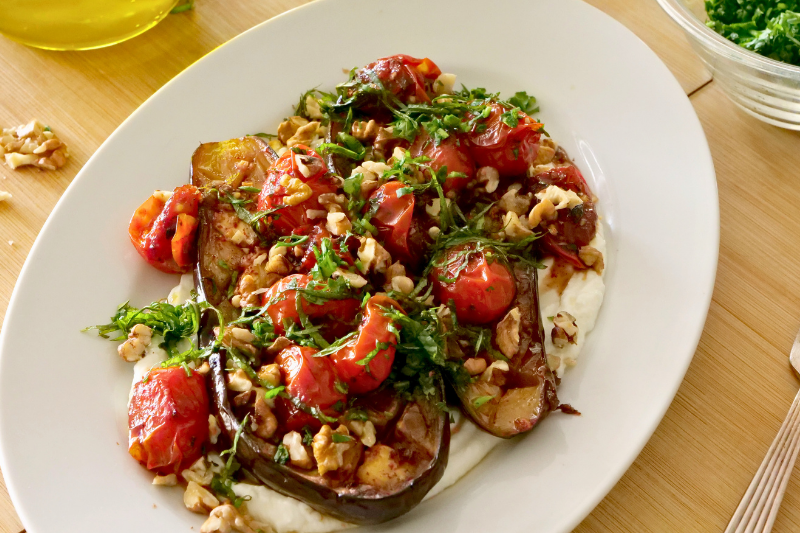
Ikarian Hot Honey Eggplant with Blistered Tomatoes, Walnuts & Yogurt
Ingredients
For the eggplant
- 2 large eggplants
- 3 tablespoons Greek wildflower honey
- 1 teaspoon Aleppo pepper
- 2 garlic cloves finely grated
- 2 tablespoons extra virgin olive oil for finishing
For the blistered tomatoes
- 1 cup teardrop or cherry tomatoes
- Reserved glaze from above
To serve
- 1 cup full-fat Greek yogurt
- ¼ cup walnuts toasted and roughly crushed
- 2 tablespoons fresh mint leaves
- 2 tablespoons fresh flat-leaf parsley
- Zest of 1 lemon
Instructions
-
Preheat your oven to 425°F (220°C). Line a baking sheet with parchment.
-
Score the eggplants. Halve each eggplant lengthwise. Using a sharp knife, score the cut face in a deep crosshatch pattern — cut all the way down to just above the skin, spacing the cuts about ¾ inch apart. This is not decoration: the deeper you score, the further the glaze will penetrate into the flesh.
-
Make the glaze. Mix together the honey, Aleppo pepper, and grated garlic. Set aside about 1 tablespoon for the tomatoes. Brush the rest generously into every score line of both eggplant halves. Don't hold back.
-
Roast. Place the eggplants cut-side up on the prepared baking sheet. Roast for 30 minutes without touching them. The score lines will caramelise to deep amber, the cut edges will char, and the flesh will collapse and soften completely. Remove from the oven.
-
Blister the tomatoes. While the eggplant roasts, heat a cast-iron skillet over very high heat until smoking. Add the tomatoes in a single layer. Do not move them. Allow them to char hard on one side, about 2 to 3 minutes, then shake the pan once and cook another minute. Remove from heat and immediately toss with the reserved glaze. The residual heat will do the rest.
-
Plate. Spoon the cold Greek yogurt across each plate in a wide swoop. Place the hot roasted eggplant on top. Pile the blistered tomatoes alongside or over the top. Scatter the crushed walnuts, fresh mint, and parsley. Add the lemon zest and a generous drizzle of extra virgin olive oil. Serve immediately.
Notes
On the yogurt: Use only full-fat Greek yogurt here — the fat carries flavor, and this dish needs the richness to balance the charred eggplant. The cold temperature is intentional: it keeps the live cultures intact and creates a temperature contrast that is part of the dish's character.
On the honey:Use a bold Greek honey — wildflower or thyme. A mild honey will be lost against the char of the eggplant. Thyme honey in particular has a slight bitterness that cuts beautifully through the sweetness of the glaze.
On the Aleppo pepper: Aleppo pepper (also called pul biber) has a moderate heat level, deep brick-red color, and a fruity, slightly oily character that is irreplaceable here. It's available at most Middle Eastern and specialty food stores, or online. In a pinch, substitute half sweet paprika and half crushed red pepper flakes — but Aleppo is worth seeking out.
On scoring:If the crosshatch is too shallow, the glaze sits on the surface and slides off during roasting. Go deep and don't worry about cutting all the way through to the skin. The scored flesh should open up and spread slightly as the eggplant roasts.
Make it a meal: Serve with warm pita or crusty country bread to soak up the yogurt and pan juices.
WHY IS THIS HEALTHY?
This dish is a study in Mediterranean diet principles done right. Eggplant is low in calories and carbohydrates but high in fiber, which supports gut health and satiety. It's rich in nasunin, a potent antioxidant in the skin that has been linked to protecting brain cell membranes. Walnuts provide omega-3 fatty acids and plant protein. Full-fat Greek yogurt delivers calcium, protein, and live probiotic cultures. Greek wildflower honey contains antioxidants and antimicrobial compounds. And extra virgin olive oil — used as a finishing drizzle here — is the cornerstone of the Mediterranean diet's cardiovascular benefits.
On Ikaria, where this recipe has its roots, the local diet is characterized by a high intake of olive oil, vegetables, legumes, moderate amounts of fish and dairy, and very little processed food. The result is not just longevity in years, but a quality of life that food researchers have studied for decades. This dish is a small, delicious expression of that tradition.
LOVE EGGPLANT? EXPLORE MORE RECIPES
Eggplant is one of the great workhorses of the Greek kitchen — versatile, deeply flavored, and endlessly adaptable. Here are some of my favorites:
- Melitzanosalata (Roasted Eggplant Salad with Capers and Onions)]: The classic Greek eggplant dip, smoky and bright with capers and onion.
- Eggplants Stuffed with Onions, Raisins, and Grape Molasses]: A beautifully sweet, vegan take on Imam Bayildi, one of the great olive-oil dishes of Greece.
- Eggplant Rolls with Walnut "Meat": Smoky grilled eggplant wrapped around an herby walnut filling. Plant-forward, stunning on a meze table.
- Skordostoumbi – Zakynthos Garlicky Eggplant: A classic from the Ionian islands with a signature sweet-sour vinegar sauce and a generous amount of garlic.
- Eggplant Papoutsakia with Bulgur, Tomatoes and Herbs: A light, vegan variation on stuffed eggplant, filled with herby bulgur.
- Clay-Baked Whole Eggplants with Feta and Tomatoes: A summer Athens taverna classic, baked until the eggplant is completely tender and the feta melts into it.
- Moussaka (Baked Eggplant with Ground Meat and Bechamel: The iconic Greek classic. When it's made well, it's one of the world's greatest dishes.
- All Eggplant Recipes here