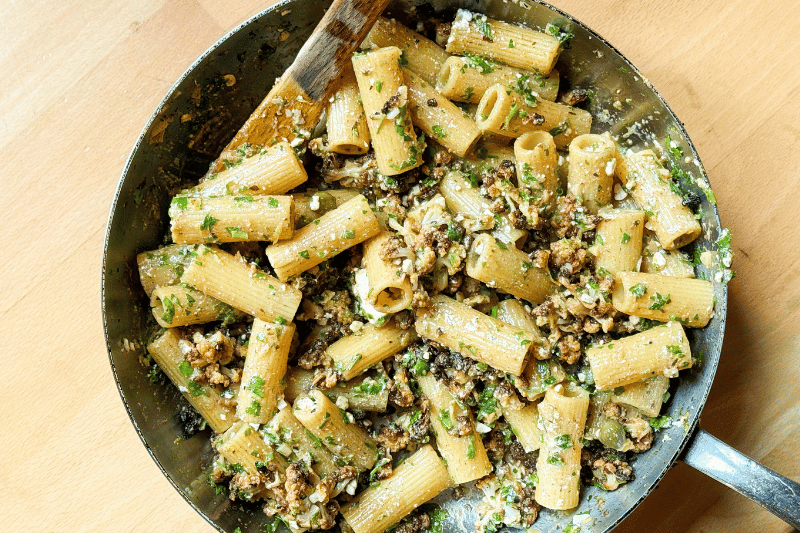
Crispy Cauliflower Pasta with Feta, Lemon & Garlicky Breadcrumbs
Ingredients
For the Cauliflower
- 1 large head cauliflower about 2–2.2 lb / 900 g–1 kg, cut into bite-size florets
- 3 Tbsp extra-virgin Greek olive oil
- 1 tsp dried Greek oregano
- Sea salt and freshly ground black pepper to taste
- Pinch of boukovo Greek red pepper flakes or other red pepper flakes, optional
For the Pasta
- 14 oz / 400 g short pasta such as rigatoni, mezze maniche, casarecce or penne
- 3 Tbsp extra-virgin Greek olive oil
- 3 garlic cloves thinly sliced
- 2 Tbsp capers drained
- Finely grated zest of 1 lemon
- 3 Tbsp fresh lemon juice or to taste
- 5.3 oz / 150 g Greek feta crumbled, divided
- 1/2 cup chopped fresh flat-leaf parsley
- 1/2 –1 cup reserved pasta cooking water
- Sea salt and freshly ground black pepper as needed
For the Garlicky Breadcrumbs
- 1/2 cup fresh or coarse breadcrumbs
- 1 1/2 Tbsp extra-virgin Greek olive oil
- 1 small garlic clove finely chopped or grated
- Finely grated zest of 1/2 lemon
- Pinch of sea salt
Instructions
-
Heat the oven. Preheat the oven to 450°F / 230°C. Use a large rimmed sheet pan so the cauliflower can roast in a single layer.
-
Roast the cauliflower. Toss the cauliflower with 3 tablespoons olive oil, oregano, salt, pepper and optional boukovo. Spread in a single layer and roast for 25–30 minutes, turning once, until deeply golden at the edges and tender but not mushy.
-
Make the garlicky breadcrumbs. While the cauliflower roasts, heat 1 1/2 tablespoons olive oil in a skillet over medium heat. Add the breadcrumbs and cook, stirring frequently, until golden and crisp, about 3–4 minutes. Add the garlic and lemon zest during the final minute, stirring so the garlic becomes fragrant without burning. Season lightly with salt and set aside.
-
Cook the pasta. Bring a large pot of well-salted water to a boil. Cook the pasta until al dente. Before draining, reserve at least 1 cup of the pasta cooking water.
-
Build the sauce. Heat 3 tablespoons olive oil in a large skillet over medium-low heat. Add the sliced garlic and capers and cook gently until the garlic is fragrant and just beginning to turn golden. Add about 1/2 cup reserved pasta water and swirl the pan to emulsify the oil and water.
-
Toss. Add the drained pasta and roasted cauliflower to the skillet. Toss well over medium heat, adding more pasta water a little at a time as needed, until the pasta looks glossy and the cauliflower is distributed throughout.
-
Finish off the heat. Remove from the heat. Add the lemon zest, lemon juice, parsley and about two-thirds of the feta. Toss gently. Taste and adjust the salt, pepper, lemon and red pepper flakes if using.
-
Serve. Divide among four bowls. Finish with the remaining feta, a generous shower of the garlicky breadcrumbs and, if desired, a final drizzle of extra-virgin Greek olive oil.
Notes
Diane’s Tips
Brown the cauliflower deeply. Pale steamed cauliflower will not give this pasta the same flavor. Let the edges get genuinely golden and crisp.
Don’t crowd the sheet pan. Space is what allows cauliflower to roast instead of steam. Use two pans if necessary.
Save more pasta water than you think you need. The starchy water is the sauce here. It emulsifies with the olive oil and feta and keeps the pasta glossy rather than dry.
Add the feta off the heat. This lets some of it soften into the pasta without turning completely liquid, while the feta added on top stays distinct.
Add breadcrumbs at the very end. They should stay crisp. Once they sit in the pasta they will begin absorbing moisture.
Capers replace the need for a heavy sauce. Their salty, briny bite is especially good against sweet roasted cauliflower and lemon.
Short pasta works best. Choose a shape with ridges, curves or hollows that catches feta, capers and little bits of breadcrumb.
Why Cauliflower Works So Well with Pasta
Roasting transforms cauliflower: its edges caramelize, its mild flavor becomes nutty and concentrated, and the florets become substantial enough to stand alongside pasta rather than disappear into it. Cauliflower belongs to the cruciferous vegetable family and provides dietary fiber, vitamin C and folate. Pairing a full head of cauliflower with 400 grams of pasta shifts the balance toward a more plant-forward bowl while still delivering the comfort and satisfaction of a pasta dinner.
Ingredient Notes
Cauliflower: Cut the florets into reasonably similar sizes so they roast evenly, but do not make them tiny; visible caramelized cauliflower is the star of this dish.
Feta: Use good Greek feta. Its tang and salinity contrast beautifully with the sweet roasted cauliflower.
Capers: Drain them well. They bring a concentrated salty, briny note that keeps the pasta lively.
Lemon: Both zest and juice matter: zest brings fragrance while juice supplies acidity.
Breadcrumbs: Fresh coarse crumbs give the best irregular crunch, but good-quality dry breadcrumbs can also work.
Greek oregano: A small amount reinforces the Mediterranean character without overwhelming the lemon and cauliflower.
What to Serve with Cauliflower Pasta
This is substantial enough to serve on its own, especially because the cauliflower makes up such a large part of the dish. If you want something alongside it, keep it simple: bitter seasonal greens, a crisp green salad or a tomato-cucumber salad all work. For a larger meal, serve smaller portions of the pasta before simply grilled fish or chicken.
Greek Wine Pairing: Moschofilero from Mantinia
I’d pour a dry Moschofilero from Mantinia with this pasta. Its bright acidity, citrusy character and floral lift are excellent with lemon, capers, parsley and salty feta, while its light-to-medium body won’t overwhelm the roasted cauliflower. The wine’s freshness is especially useful here because the dish gets richness from olive oil and feta but has no heavy sauce. Serve it well chilled.
If You Like This Recipe…
If cauliflower is one of your favorite fall and winter vegetables, try these recipes next:
- Whole Wheat Pasta with Cauliflower, Oranges, Walnuts & Rosemary — Another cauliflower pasta, but completely different in personality: whole-wheat pasta with orange, rosemary, sun-dried tomatoes, warm spices and walnuts.
- Whole Roasted Cauliflower with Feta and Greek Honey — A dramatic whole-roasted cauliflower with garlic, mustard, Greek honey, balsamic, feta and parsley.
- Cauliflower Steaks with Crispy Capers and Spicy Tahini Sauce — Another recipe that shows how well cauliflower works with capers, this time with a spicy tahini sauce.
- Melting Broccoli & Cauliflower with Feta and Lemon-Dill Butter — Roasted broccoli and cauliflower with feta and a bright lemon-dill finish.
- Steamed Cauliflower with Honey-Feta Dressing — A lighter Mediterranean cauliflower dish with feta, citrus, herbs and pomegranate.
Make-Ahead & Storage
The cauliflower can be roasted several hours ahead and the breadcrumbs can also be prepared in advance; keep the breadcrumbs in an airtight container at room temperature so they stay crisp. Cook and toss the pasta shortly before serving.
Store leftover pasta in an airtight container in the refrigerator for up to 3 days. Reheat gently in a skillet with a splash of water and a little olive oil. Add fresh breadcrumbs only after reheating so they remain crisp.