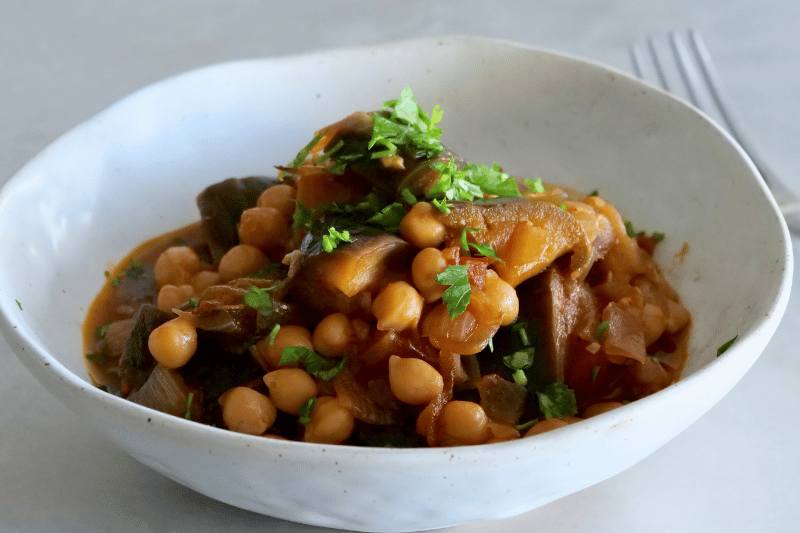
Olympion’s Chickpeas with Eggplant, Onions, and Petimezi
Authentic Greek Chickpea and Eggplant Stew from Athens. This deeply comforting Greek chickpea and eggplant dish is inspired by one of Athens’ beloved traditional cafeneia and is featured in my cookbook Athens: Food, Stories, Love, a culinary journey through the everyday flavors and food culture of Greece’s capital.Some of the best, most authentic fare in Athens can still be found in neighborhood cafeneia — traditional multipurpose eateries that serve everything from morning coffee to lunch and ouzo as the day unfolds. Once the heartbeat of every neighborhood, these gathering places were filled with regulars, old-timers, and today, a younger generation eager to reconnect with an Athens that is slowly disappearing.A few of these old stalwarts remain. Among them is Olympion in Pangrati, which serves some of the city’s most soulful traditional cooking, often with subtle modern touches. This rich chickpea and eggplant stew — layered with sweet red onions, herbs, and petimezi — is one of my favorite Greek lunch bowls and a beautiful example of authentic Mediterranean plant-based cooking.
Ingredients
- 1 pound dried chickpeas or 4 (15-ounce) cans good-quality low-sodium chickpeas
- ½ cup extra-virgin Greek olive oil divided
- 5 red onions coarsely chopped
- 4 garlic cloves chopped
- 3 medium eggplants trimmed and cut into 1½-inch cubes
- 2 cups chopped fresh or canned plum tomatoes
- 1 heaping tablespoon tomato paste diluted in ¼ cup water
- 2 tablespoons grape molasses petimezi
- 1 cinnamon stick
- 6 fresh thyme sprigs
- 2 bay leaves
- Salt and freshly ground black pepper to taste
- Optional: vegetable stock instead of water
Instructions
Prepare the Chickpeas
-
If using dried chickpeas, soak overnight. Drain and place in a large pot with fresh water covering by about 2 inches. Simmer 1 to 1½ hours until tender. Drain.
-
If using canned chickpeas, rinse thoroughly and drain.
Build the Flavor Base
-
Heat ¼ cup olive oil in a Dutch oven over medium heat.
-
Add onions and garlic. Sauté until soft and translucent, about 8–10 minutes.
-
Add eggplant and stir gently to coat. Eggplant absorbs oil quickly — add more if needed. Cook 5–7 minutes until lightly browned.
Simmer the Stew
-
Add chickpeas and toss gently.
-
Add tomatoes, diluted tomato paste, petimezi, cinnamon stick, thyme, and bay leaves.
-
Pour in enough water or vegetable stock to reach about two-thirds up the contents of the pot.
-
Bring to a boil, reduce heat to low, cover, and simmer about 45 minutes until most liquid is absorbed and flavors meld.
-
Season well with salt and pepper during the final 10 minutes.
-
Remove bay leaves and serve hot, warm, or at room temperature.
Notes
What Is Petimezi?
Petimezi is traditional Greek grape molasses made by slowly reducing grape must into a thick, naturally sweet syrup. Used since antiquity, it adds gentle sweetness and depth to savory dishes, especially legumes and vegetable stews.
Substitutes if needed:
- Reduced balsamic with a little honey
- Date syrup
- Pomegranate molasses (slightly more tart)
Serving Suggestions
- With crusty village bread
As part of a Greek mezze spread - With olives and simple salad
- Over bulgur or rice
- With feta on the side (optional, not vegan)
Storage and Make-Ahead Tips
- Refrigerate up to 4 days
- Flavor improves overnight
- Freeze up to 3 months
- Reheat gently with a splash of water or stock
Why This Dish Is Classic Mediterranean Cooking
This traditional Greek chickpea recipe reflects the core principles of the Mediterranean diet:
- Plant-based protein from legumes
- Olive oil as the primary fat
- Seasonal vegetables
- Slow simmering for depth of flavor
- Natural sweeteners instead of refined sugar
- It is nourishing, deeply flavorful, and rooted in everyday Greek culinary tradition.
Frequently Asked Questions
Is this Greek chickpea dish vegan?
Yes. It is naturally plant-based and typical of traditional Greek Mediterranean cooking.
Can I use canned chickpeas instead of dried?
Yes. Rinse and drain before using.
What does petimezi taste like?
It is naturally sweet with deep grape flavor and mild acidity, similar to a delicate molasses or reduced balsamic.
Can this be served cold?
Yes. Like many Greek vegetable dishes, it is delicious hot, warm, or at room temperature.